Tag ED

Making L-Carnitine Production Cleaner with Electrodialysis Technology
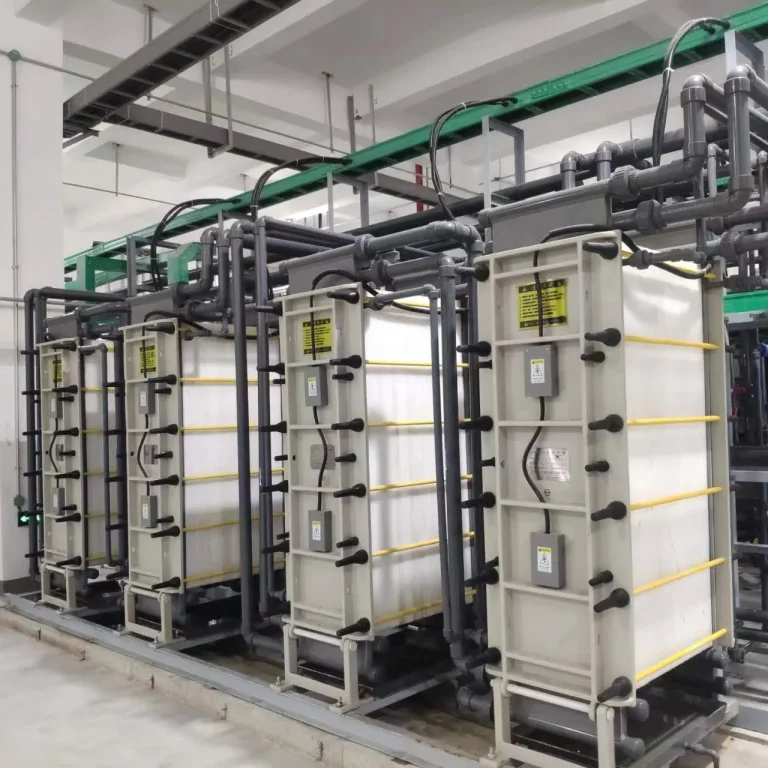
Efficient desalination is an important step in L-Carnitine production. How can manufacturers reduce salt content while minimizing chemical consumption and wastewater generation? LANRAN’s Electrodialysis (ED) technology provides an effective approach. In an L-Carnitine production process in Taizhou, Jiangsu, China, the…
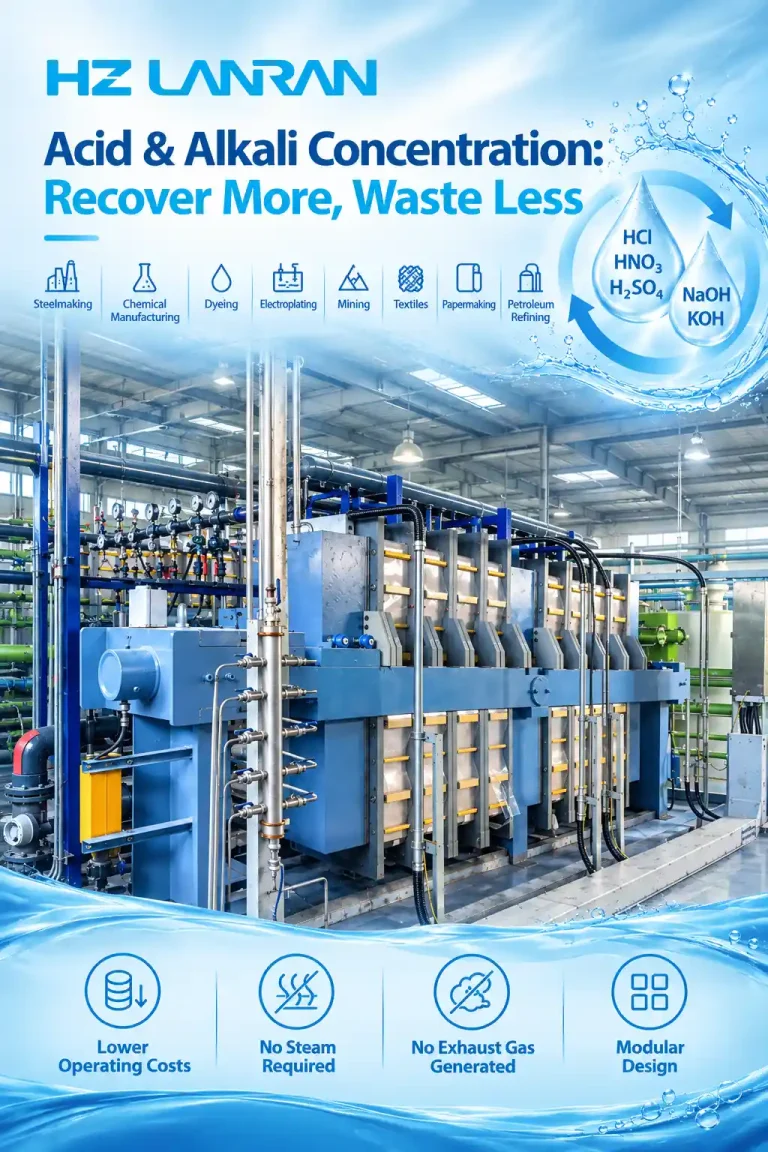
Acid & Alkali Concentration: Recover More, Waste Less

Many industries generate acidic and alkaline wastewater during production. Common sources include steelmaking, chemical manufacturing, dyeing, electroplating, mining, textiles, papermaking, and petroleum refining. These wastewater streams often have different acid and alkali levels. In addition, they may contain dissolved salts,…

β-Alanine Desalination with LANRAN Two-Stage Electrodialysis

β-Alanine is an amino acid used in applications such as sports nutrition. In its production process, effective desalination is important for meeting downstream processing requirements. Recently, LANRAN partnered with a high-tech pharmaceutical enterprise specializing in functional sugars and sugar alcohols…

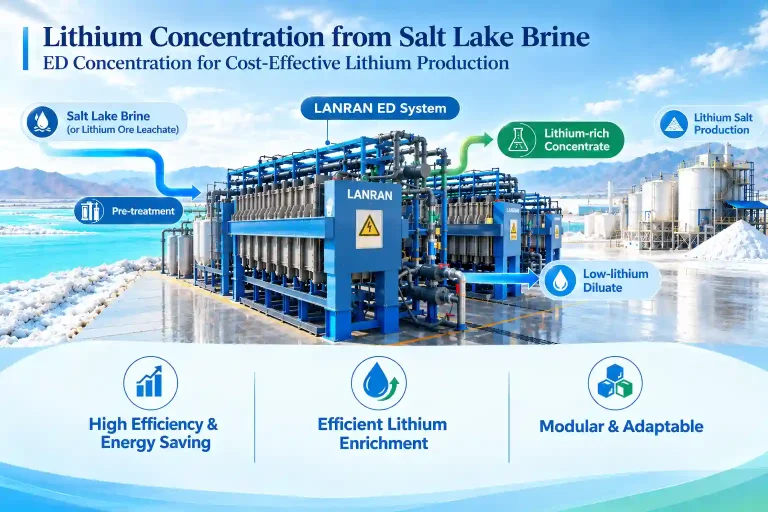
Smarter Lithium Concentration with Electrodialysis

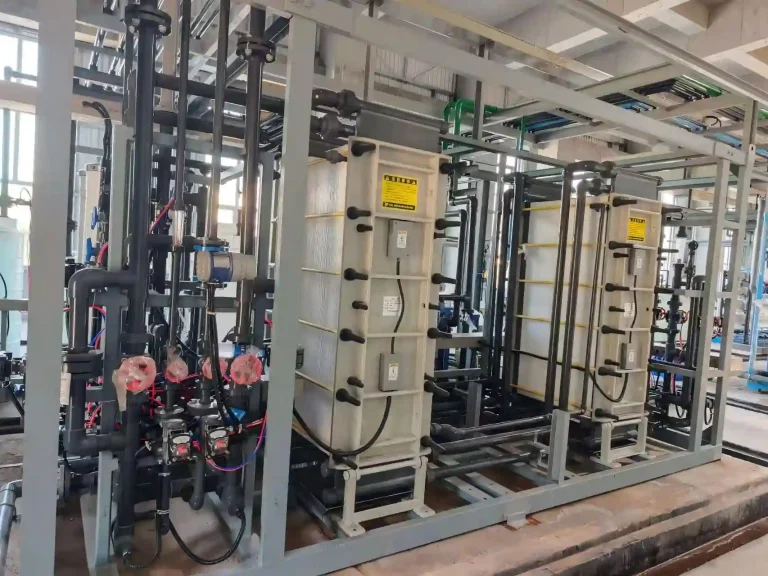
As lithium demand continues to grow, efficient and cost-effective lithium concentration is becoming increasingly important. At LANRAN, our 𝐄𝐥𝐞𝐜𝐭𝐫𝐨𝐝𝐢𝐚𝐥𝐲𝐬𝐢𝐬 (𝐄𝐃) 𝐭𝐞𝐜𝐡𝐧𝐨𝐥𝐨𝐠𝐲 𝐜𝐚𝐧 𝐛𝐞 𝐮𝐬𝐞𝐝 𝐭𝐨 𝐩𝐫𝐞-𝐜𝐨𝐧𝐜𝐞𝐧𝐭𝐫𝐚𝐭𝐞 𝐥𝐢𝐭𝐡𝐢𝐮𝐦-𝐜𝐨𝐧𝐭𝐚𝐢𝐧𝐢𝐧𝐠 𝐛𝐫𝐢𝐧𝐞𝐬 𝐚𝐧𝐝 𝐥𝐞𝐚𝐜𝐡𝐚𝐭𝐞𝐬 through ion transport across ion-exchange membranes, producing a lithium-rich concentrate…

Electrodialysis for Steel Wastewater Zero Liquid Discharge

Steel production generates high-salinity wastewater that can be difficult to treat. As water reuse and zero liquid discharge (ZLD) become more important, managing reverse osmosis (RO) concentrate remains a key challenge. Final evaporation can consume significant energy. Therefore, reducing the…

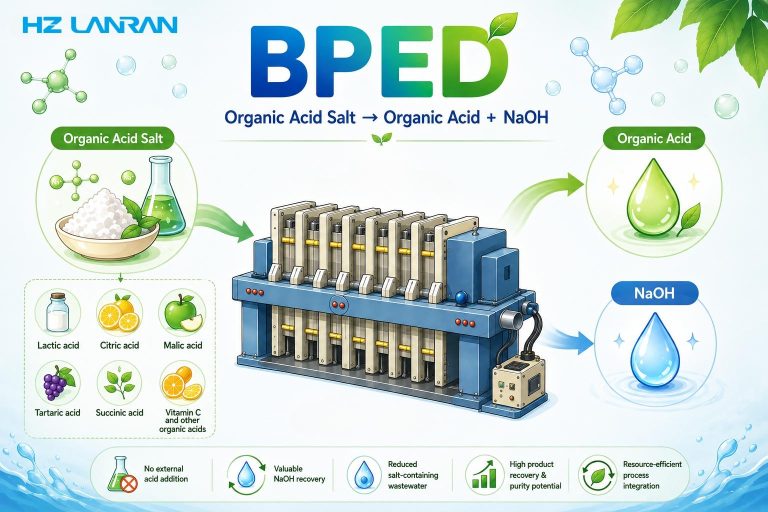
From Organic Acid Salts to Organic Acids with BPED

In fermentation, biochemical, and pharmaceutical processes, organic acids are often recovered or neutralized as sodium salts. Converting these salts back into free organic acids traditionally requires external acids, which can introduce additional salts and increase downstream treatment requirements. Bipolar Membrane…

Lithium Recovery from Spent LFP Batteries with Electrodialysis

Recycling spent lithium iron phosphate (LFP) batteries helps recover valuable lithium and supports more sustainable battery supply chains. Efficient lithium recovery also plays an important role in improving resource utilization. Located in Qujing, Yunnan Province, China, this battery recycling expansion…